
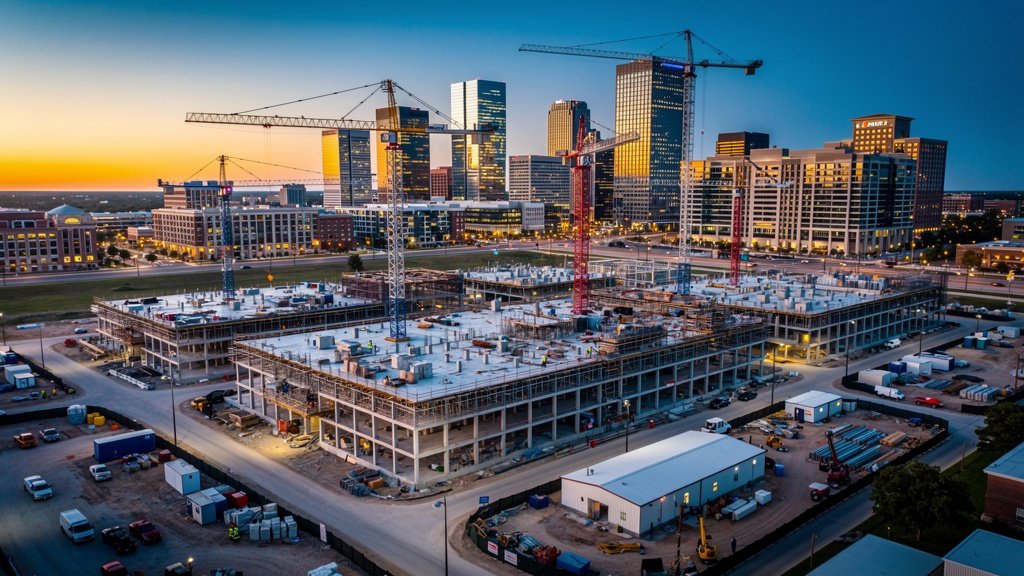
Construction lending in 2026 is active, but much more selective than it was during the 2020–2021 cycle. Lenders are still funding good projects. But borrowers now need more equity, better documentation, stronger reserves, and a more credible exit plan to win serious interest.
If you are raising construction debt today, the market is not broken. It is just more disciplined.
How the Construction Lending Market Has Changed
The biggest shift in today’s market is underwriting discipline.
In the easy-money period, many borrowers became used to higher leverage, thinner reserves, and faster approvals. That environment is gone. Construction lenders now spend more time reviewing budgets, timelines, contingencies, sponsor experience, and exit risk before issuing terms.
That does not mean construction capital is unavailable. It means lenders want fewer surprises.
Who Is Lending on Construction Deals in 2026?
Several lender groups are active in the market.
Debt funds and private credit lenders remain major players in construction finance, especially for transitional, time-sensitive, or higher-yield opportunities.
Banks are still making construction loans, but they are generally more selective than in prior years. Relationship lending, lower leverage, experienced sponsors, and familiar markets tend to perform best.
Life companies and agency-related executions are usually more relevant on the permanent financing side than as traditional day-one construction lenders, although select construction-to-perm options do exist.
Typical Construction Loan Terms in 2026
Construction loan terms vary widely by lender, property type, sponsorship, and market — but several themes are consistent.
Lower Leverage
Many conventional senior construction loans are being sized more conservatively than they were a few years ago. Borrowers should expect more equity in the deal and more scrutiny around loan-to-cost.
Floating-Rate Pricing
Most construction loans remain floating-rate. The all-in cost depends on the benchmark rate, lender spread, leverage, fees, and reserve structure.
Larger Reserve Requirements
Lenders are focused on whether debt service, carry costs, and lease-up risk are fully accounted for in the budget.
More Recourse Support
Completion guarantees, carry guarantees, and other sponsor support remain common. Non-recourse construction loans still exist, but they are less common and usually tied to stronger sponsor profiles.
What Property Types Are Getting Construction Financing?
Some asset classes are attracting more lender interest than others.
Multifamily Construction
Multifamily remains one of the stronger sectors for construction financing, especially when the deal supports a clear permanent loan takeout.
Industrial Construction
Industrial continues to finance well in many markets, particularly for build-to-suit, infill logistics, and light industrial product. Speculative industrial can be more difficult where supply has expanded quickly.
Infill Residential and Small-Balance Development
Specialty lenders are still active in smaller residential and infill projects when the builder is experienced and the business plan is straightforward.
Harder-to-Finance Asset Classes
Luxury condo, hospitality ground-up, suburban office, and speculative retail can still get financed, but the lender pool is smaller, and the execution bar is higher.
What Construction Lenders Want to See
A strong construction loan request starts with a complete package.
Lenders want a realistic budget, a credible construction schedule, a proven sponsor and GC, clear contingency, and a believable exit strategy. They also want to know how much real cash equity is going into the deal.
In today’s market, a clean and professional package is not a bonus. It is the minimum expectation.
Best Markets for Construction Lending
Construction capital continues to favor growth markets, but lenders are more selective than broad headlines suggest.
Sun Belt and suburban markets still attract significant interest, especially for multifamily and industrial. But supply matters. Markets with strong long-term fundamentals can still be harder to finance in the short term if recent deliveries have pressured rents or absorption.
West Coast construction remains more challenging because of higher costs, entitlement complexity, insurance expense, and longer project timelines. Deals still get done — but they often require more equity and more conservative structuring.
Key Takeaways on Construction Debt in 2026
Construction lending is still available, but borrowers should expect a tougher process than in the past.
The projects that finance most efficiently are the ones with:
- Strong sponsorship
- Realistic budgets
- Adequate contingency
- Clear reserve planning
- A credible exit
The market is still lending. It is simply asking harder questions.
Final Thoughts
If you are seeking construction financing in 2026, the best strategy is preparation.
Borrowers who know their numbers, understand their market, and present a complete package are still winning lender attention. Borrowers who rely on aggressive assumptions or incomplete materials are finding the process much harder.
In this market, clarity and credibility are what move a deal forward.
ABOUT TRANS_BAY CAPITAL
Who We Are
Trans-Bay Capital is a commercial real estate capital advisory firm and direct lender headquartered in San Francisco. We advise sponsors and operators on debt originations across the full capital stack — from bridge and construction to permanent financing and structured equity.
Our AI-powered platform surfaces optimal financing from a network of 7,000+ institutional lenders, delivering term sheets in 48 to 72 hours with a 95% close rate. We serve sponsors across 44 states with loan sizes from $5M to $100M+. Institutional precision. Boutique partnership. Certainty of execution.
#BridgeLending #ConstructionFinance #PermanentDebt #Mezzanine #PreferredEquity #CapitalAdvisory